Sunday, 7 June 2020

What is Coronavirus?

The Coronavirus is a type of virus. The word ' Corona ' means crown or pointy. This type of virus has spikey outer surface. Their outer cell membrane is made up of proteins or lipid layers. Coronaviruses are a large family of viruses that cause Common cold ( Rhinovirus) to more severe diseases like Middle east respiratory syndrome ( MERS) and Severe acute respiratory syndrome ( SARS ) and to the latest COVID-19. COVID-19 is similar to that of the SARS outbreak in China. 

Since the death toll of SARS and MERS weren't accounted for as a lot, and also that the virus become dormant and stopped affecting people, The work on its vaccine was stopped. 

To talk of viruses in general, There is limited amount of vaccines for different viruses, For measles, polio, mumps, rubella and chickenpox. 

And yet, we constantly need to get vaccines for the viruses. Because they constantly mutate themselves to trick the immune system and go unseen. Mutations can cause severe complications, that could lead to the vaccines and antibiotics ineffective. 
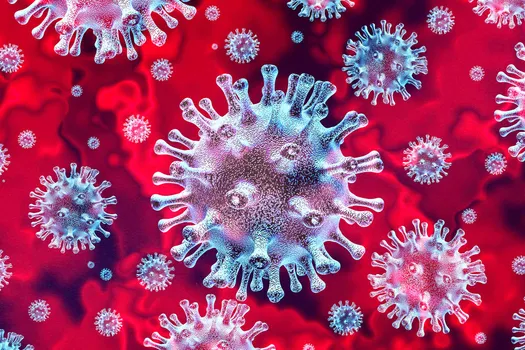
Coronavirus & COVID-19 Overview: Symptoms, Risks, Prevention ...Therefore, more pressure to constantly produce new vaccines. The now COVID 19 has mutated from SARS, commonly called as SARS COV 2. This leads to increased time in finding an effective vaccine with no side effects. 


COVID-19 vs. SOAP WATER

Due the recent pandemic, All that we care about is to keep ourselves hygienic. Precautions like wearing a mask, to not touch our faces and wash ours hands several times a day. Coming to washing hands, Is soap water enough to eradicate the virus from our hands? What does soap water do to the virus? 

The Corona virus that causes COVID-19 has an outer protective Bi-lipid layer. These lipids are pin shaped molecules whose heads are attracted to water, and the tails are phobic to water. Similarly, the outer structure of the virus break through the cell membrane and hijack our cells. This is where soap comes in, A single droplet of soap has millions of molecules called amphipiles, which resemble lipids. 

The tails of amphipiles compete with the virus' bi-lipid layer for space. This causes a chaos in the outer membrane of the cell and hence can break the virus' membrane, making the whole organism crashing down. Then the amphipiles form clusters around the virus remains and become whole, which gets washed away with water. 


How Coronavirus Hijacks Your Cells - The New York Times


Thursday, 9 January 2020

Science behind hiccups

You do it though you don't want to, you just don't seem to stop it on your own. This phenomena is called hiccups. You all have gotten that one ever lasting hiccup streak and have always wondered why you get it. 

Hiccups are caused by involuntary contractions in the diaphragm. Diaphragm is the muscle that separates your chest from your abdomen and plays an important role in breathing. This involuntary contraction causes your vocal cords to close very briefly, which produces the characteristic sound of a hiccup.

Hiccups pass in a couple of minutes for everyone. If they keep coming and going, then they are most likely a result of your eating habits and digestive function. 

To decrease hiccups, one needs to stimulate the Nasopharynx and the vagus nerve, which runs from the brain to the stomach. The following could decrease hiccups:

1) Drink a glass of water
2) Bite on a lime
3) Gargle with water
4) Pull hard on your tongue

 Charles Osborne has the Guinness record for longest hiccups. It is an astonishing 68 years long!


Image result for hiccups gifs

Wednesday, 23 October 2019

LISTEN UP!

Hi there, fellow readers.

I just wanted to take some time in thanking all those who have followed this blog and to those have constantly been reading. This blog was created a year and a half ago and to my surprise has been holding up more than just alright!

I have 32 awesome posts that have earned 2084 page views in such a less amount of time. The views have been from all round the world, and again to my surprise, I have a plenty good amount of views from an ' unknown region ', as said by google. Hats off and thanks to whoever you are buddy!

If you dear readers are interested in reading mystery and horror stories that keep you at night, it just happened to be your lucky day. I happen to have an another blog which you can tune into for the stories. The link is given below!

But, we have let's say, 1900 people who read and only 7 that follow. So there is still 1893 people to convince that this blog is actually a good idea to invest time on, and to follow it. There are a lot of good things here and we need to convince other people of that. So help me spread word about Bio Geek and all it takes is to press a tiny follow icon. There's just so many things that this one little icon could do!

geekywritting.blogspot.com

Do follow the blog!

SAY IT LOUD,
SAY IT PROUD,

YOURS TRULY,

I AM A BIO GEEK !!

Saturday, 14 September 2019

Science behind permanent tattoos

Hey..yeah you! The one with the beautiful ancient fire breathing dragon on your arm, I'm talking to you. Ever thought how a permanent tattoo lasts? Wouldn't the immune system clot the tattoo?

Tattoo application uses a mechanized needle to puncture the skin and eject ink into the demis, the second layer of the skin. Since the needle damages the skin, white blood cells try to absorb the ink particle to excrete it in the blood stream. Usually, this would work.

The actual secret behind the permanent nature of the tattoo is the particles of the ink and their size.
The pigment particles size are way too big to be eaten by the white blood cells, so it just sits there.

The ways to remove them are crazy dangerous, but it works. I meant Methods like burning it and cutting it out. But a much safer way is for a laser treatment. The laser beam would break the ink particles small enough to be flushed out by the white blood cells into the blood stream. But it causes problems like formation of scars and sometimes the tattoo doesn't come off completely!


Monday, 1 April 2019

The Tiger Shark

  • Tiger Shark is scientifically known as ' Galeocerdo Cuvier '. 
  • It has a maximum growth of 13 to 16 feet and weighs up to 385 to   635 kilograms. 
  • They have 48 medium sized teeth.
  • They prey mostly on bony fishes, dolphins and turtles.
  • Tiger Sharks require about 10 kilograms of food per day.
  • They can attain top speeds of 20 mph.
  • They have a lifespan of over 12 human years.
  • Tiger Sharks are known as the ' garbage cans of the sea '.
  • They are the only heir of its Genus and are only about 2 to 2.5 feet   in length when they are born.
  • Tiger Sharks are ranked as 2nd in highest attacks on humans after   the Great White. 
  • They have a lateral line on their body to help detect minute  vibrations to kill prey and can swim down to depths of 3000 feet.   
  • But this Gamer fish is part of ' vulnerable species '. They   are hunted for their fins, flesh and liver. 

Image result for tiger shark


SAY IT LOUD,
SAY IT PROUD,

I AM A BIO GEEK !!

Wednesday, 13 February 2019

The Hammerhead Shark


  • Hammerheads are flesh eating Sharks. 
  • scientific name is Spyrnidae.
  • grow up to 20 feet in length and weigh 580 kg. 
  • have numerous small, but deadly teeth of size 2 cm. They live up to 25 - 35 human years of age.
  • top speeds go up to 25 mph. They get their name ' Hammerhead ' because of their unique head structure resembling that of a hammer. 
  • actually a shape known as ' Cephacoil '. They prey mostly on Squids, Stingrays and Octopuses. 
  • are over 200 Hammerhead species and the most aggressive of them all is the ' Great Hammerhead '. 
  • a highly evolved adaptable body temperature and are mostly grey with green tint. 
  • tint helps them to blend in with the water making them a perfect predator.

STAY TUNED FOR MORE !!

SAY IT LOUD,
SAY IT PROUD,

I AM A BIO GEEK !!

Saturday, 9 February 2019

The Link between stress and memory

Let's say you have a test comping up. You have been preparing for weeks now and have completely gotten ready. On the day of the test, you were given the question paper and suddenly....you're blank, you forgot the meaning of the word, ' Ataraxia '. You were stressed, you know you have read it somewhere, but you just can't remember. 


  • Whatever you see, read or hear gets stored in the Brain as memories.
  • order to become permanent memories, information have to be consolidated by the hippocampus, controlled by the amygdala which emphasizes experiences related to strong emotions. 
  • hippocampus then codes memories into the Brain. Once encoded, the memories can be remembered, it is usually the prefrontal cortex that has most memories. But how does stress affect you memory ?


  • Actually, moderate stress can help experiences enter your memory.
  • Brain responds to stressful stimuli by releasing hormones like corticosteroids which activates a threat response in the amygdala and make memory making faster.
  • when huge doses of corticosteroids are secreted, it hampers the process of making and remembering memories. 
  • threatened amygdala does not allow the prefrontal cortex to help revive information which leads to your mind going blank.
  • can be averted by making yourself used to a stressful environment by solving timed tests or by sitting at a desk to resemble that of a classroom and to exercise. All this to ensure that you be ATARAXIC next time.

ATARAXIA : THE STATE OF CALMNESS, FREE FROM ANXIETY

SAY IT LOUD,
SAY IT PROUD,

I AM A BIO GEEK !!

Saturday, 20 October 2018

Science behind tan


  • Tanning is the process of the skin to darken its color. 
  • Tanning takes place when the pigment in your skin reacts to ultraviolet rays. 
  • It takes place in the epidermis, the outer layer.
  • Skin contains special pigment cells called melanocytes, these cells contain a pinkish pigment known as  melanin, that gives us our skin color.
  • There are two types of UV rays: The UV-A and UV-B. 
  • The skin is exposed to UV-B, melanocytes produce melanin, that travels through the layers of skin and gets absorbed by other skin cells. 
  • the skin is exposed to UV-A, the melanin darkens. This darkening of your skin is its way to protect itself from excessive UV light, which we call a tan.
  • can also be done in a lot of ways like using a tomato facial. It treats pigmentation effectively and brings the glow back after a tan, improving one's skin complexion. 


Related image
SAY IT LOUD,
SAY IT PROUD,

I AM A BIO GEEK !!                                                                              
                                                                      

Friday, 19 October 2018

Science behind swelling

You step in a hole and turn your ankle, or tweak your knee. Acute injuries like these are easy to spot : first comes the pain, and then the swelling. 


  • Swelling is an abnormal enlargement of a body part. It is the body's reaction to injury. 
  • body always first reacts to an injury with redness, pain and heat ( inflammation ). 
  • is the result of the movement of fluid and white blood cells into the area of the injury. The release of chemicals cause pain in the area of injury.
  • must be put on the swelled region as ice can control inflammation by lowering heat and redness. Once the inflammation is gone, the swelling goes away.

Related image


SAY IT LOUD,
SAY IT PROUD,

I AM A BIO GEEK !!

Monday, 15 October 2018

Science behind Digestion

Digestion is the process of breakdown of food into simple, soluble molecules that can be absorbed by the blood to obtain nutrition. It might sound simple, but the process behind it is quite interesting.

Step 1 : The saliva contains an enzyme called the Salivary Amylase which breaks down starch into simple sugars. The ugly, saliva rich food in the mouth is called Bolus. 

Step 2 : The Bolus travels the food pipe and enters the stomach via the cardiac sphincter. In the stomach, the food reacts with hydrochloric acid to eliminate any bacteria. 

Step 3 : The Food then reacts with pepsin, an enzyme that breaks down proteins into amino acids.

Step 4 : The food exits the stomach (via pyloric sphincter) and enters the small intestine. The liver and pancreas secrete enzymes and juices into the small intestine to continue the process of digestion.

Step 5 : The partially digested food material reacts with bile secretions from the liver to break down fats into fatty acids and glycerol. It then reacts with pancreatic juice which further breaks down proteins.

Step 6 : All the broken down food molecules get absorbed by the walls of the small intestine to enter the blood stream so that they can be absorbed by the watery blood plasma. 

Step 7 : The digested food material moves into the large intestine where all the water is absorbed and the digested material exits the body.


HOW LONG DO YOU THINK THIS PROCESS TAKES TO COMPLETE ? COMMENT BELOW.

SAY IT LOUD,
SAY IT PROUD,

I AM A BIO GEEK !!

What is Mutation ?

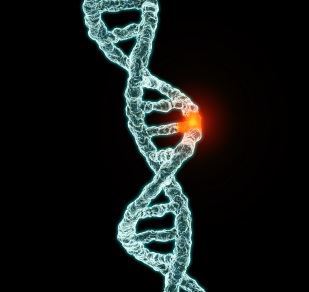
The changing of the structure of a gene, caused by the alteration, deletion or rearrangement of single base units in DNA is known as Mutation. Mutations are of two types: Hereditary and acquired.

Hereditary : Mutations inherited from the parents are Hereditary mutations. They may be present in almost every cell in the body.                                                 

Acquired    :  Mutations caused due to environmental problems such as ultraviolet exposure and also errors during cell division are acquired mutations.


Sometimes, Mutations are a good thing because the process of evolution is by random mutation. Mutations help a species become better adapted to their environment by helping the members of the species not die. 

Related image

THIS PROCESS MADE THE WOLVERINE !
DO YOU THINK BENEFICIAL HUMAN MUTATION IS POSSIBLE?
LET ME KNOW IN THE COMMENTS BELOW, AND DO CLICK FOLLOW TO NOT MISS ANY OTHER GEEKY GOODNESS !!

SAY IT LOUD,
SAY IT PROUD,

I AM A BIO GEEK !!

Sunday, 14 October 2018

The Great white shark


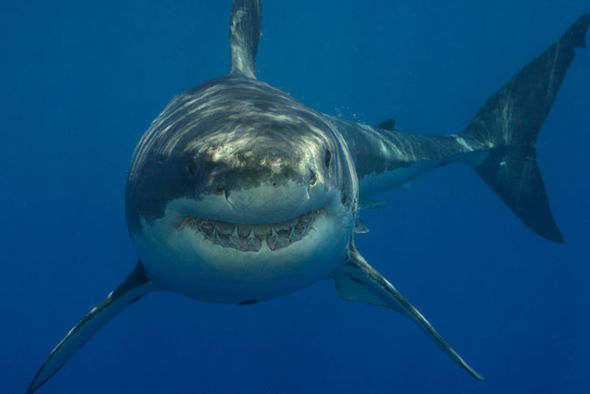
  • The Great white is a flesh eating shark. It's scientific name is Carcharodon Carcharias, The same genus as the Megalodon. 
  • Great white can grow up to 20 feet in length and can weigh about 1905 kg. 
  • They have about 300 teeth in 5 rows. In a lifetime, they have about 3000 teeth.
  • It preys on marine mammals and requires an estimated 30 kg of food a day. It can swim to top speeds of 35 mph.
  • Great whites have a lifespan of 70 human years. It's infancy is marked till 20 human years of age. 
  • It can swim to depths of 3900 feet. They are of 4 feet when born and they grow 25 cm each year. 
  • They can detect the heartbeat of the prey! They have sensory organs that allow them to detect the electrical currents of the prey within a radius of 100 meters !

  • Related image
  • They also use a technique called electroreception.
  • can use their acute electric sense to detect the Earth's magnetic field by detecting the weak electric currents induced by swimming or by the flow of water.


STAY TUNED FOR MORE ON SHARKOPEDIA !!

SAY IT LOUD,

SAY IT PROUD,


I AM A BIO GEEK !!

Friday, 21 September 2018

Difference between a Cold and a Fever

When you wake up sneezing and coughing and feeling weak, How do you know whether you have cold or fever symptoms ? It is important to know that difference between the two.

COLD  

Related image

  • Cold usually begins with a sore throat, And is more likely to go away within a day or two. 
  • symptoms, runny nose and congestion follow, along with cough during the fourth and fifth days. 
  • are more likely to have a fever with a cold. Cold symptoms will most likely last for a week.


FEVER 


  • Fever is an increase in body temperature, You start feeling tired, restless. 
  • symptoms include dehydration, body pains and loss of appetite. 
  • can last for about 4-6 days depending on its cause. Viral lasts for long whereas bacterial doesn't take so long.


Now you know the difference between a cold and a fever!

Click that follow button so that you don't miss a post on Bio Geek!!

SAY IT LOUD,
SAY IT PROUD,

I AM A BIO GEEK !!

Wednesday, 29 August 2018

Why are Sharks so awesome ?

There are over 400 species of Sharks in our waters. And most of them are known to be fearless predators with huge teeth, Equipped with a great set of survival skills, They are one of nature's ruthless killing machines.
But how do they achieve this?

Image result for ferocious great white1. Flesh-eating sharks have about 3000 long or small sharp teeth that are arranged in 5 rows in the fleshy part of the jaw. Sharks can regrow its teeth that are damaged and broken very quickly-All the 3000 teeth in a lifetime !

2.They have a highly developed sense of smell. It is said that a shark can smell  blood from a distance of 500 meters !

3. Sharks can detect the heartbeat of the prey! They have sensory organs that allow them to detect the electrical currents of the prey within a radius of 100 meters !

4.Sharks also use a technique called electroreception. They can use their acute electric sense to detect the Earth's magnetic field by detecting the weak electric currents induced by swimming or by the flow of ocean currents.

5.Sharks are fast swimmers, This is obtained due to their streamlined body, Fins, gills. The fastest shark is the Mako shark that swims a 70 mph! And 96 mph when hungry !


Food for thought - Sharks have 8 senses.
Sharks are really awesome creatures and each shark has its own unique abilities, And it is a must to explore them.
Don't worry! I got you covered ! I will  be launching a brand new series called ' SHARKOPEDIA ', to educate you about each species of sharks, right here on Bio Geek!
Find out sharks's 8 senses and let me know in the comments down below !

SAY IT LOUD,
SAY IT PROUD,

I AM A BIO GEEK !!


Tuesday, 21 August 2018

Hypermobility

Image result for double jointed

  • Ever seen someone popping their joints and seeing their body parts be unusually more flexible than it is supposed to be?  
  • This is called Hypermobility. 
  • Joints that are more flexible than normal or that move in excess of a normal range of motion are considered Hypermobile.
  • 20% of the population in the world are Hypermobile. 
  • Compared to boys, Girls are more Hypermobile. Hypermobility tends to run in families, but its exact cause is unknown.
  • Genes that are involved in the production of collagen, a protein important for joint, tendon and ligament function, are believed to play a role.
  • Being double jointed has often increased the risk of asthma, Cardiovascular problems and bowel irritability. 
  • Soon after, Researchers concluded that Hypermobility was linked to mental conditions as well. 
  • Hypermobile people would be more prone to anxiety and increased flight or flight response.

NOW, IT'S YOUR TURN, ARE YOU HYPERMOBILE ?


Understand the ins and outs of your anatomy with me on BIO GEEK! Click that follow button to ensure that you don't miss any post !


SAY IT LOUD,
SAY IT PROUD,

I AM A BIO GEEK !!

Friday, 3 August 2018

Why do we sneeze ?

If you just sneezed, There was probably something irritating the inside of your nose. 


  • Sneezing is the way of your body to remove an irritation from the inside of your nose. 
  • When your nose feels irritated, It sends a message to a sneeze center of the brain, Where the brain sends signals to all the muscles to work together to create a sneeze.
  • The muscles involved in the process are the stomach muscles, chest muscles, diaphragm muscles ( a thin sheet present at the bottom of the lungs ), Vocal cord muscles, throat muscles, and the eyelid muscles. 
  • Have you noticed that we always close our eyes when we sneeze !
  • Sneezing can send particles flying out of your nose at a speed of 100 miles per hour !! 
  • people sneeze about 3 times in a row. Its just because those stubborn particles are just not getting out. It may need 2 or 3 more attempts.
  • Have you ever felt like sneezing and were about to do it, But it just suddenly stopped? did you feel irritated and annoyed that the sneeze didn't pass? 
  • Just look at a bright light ( not the sun ) and it will get you to sneeze.

Hey ! Did you just sneeze? Let me know in the comments below!
share your thoughts with me and please do suggest geeky topics for my upcoming posts!
until then,

SAY IT LOUD,
SAY IT PROUD,

I AM A BIO GEEK !!

Saturday, 30 June 2018

Why do we itch after a mosquito bite ?

Well, We've all had that one crazy itchy feeling after a mosquito bite. Ever thought of why that happens ? 

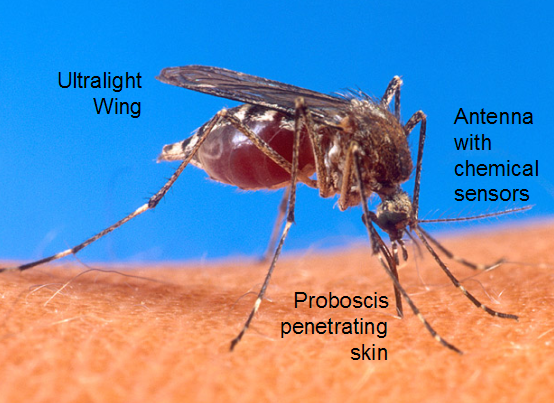
Well, When a mosquito bites you with its long straw-like mouth which is known as proboscis, It injects some of its saliva containing anticoagulant that prevents the blood from clotting and trapping the mosquito's proboscis.

Image result for proboscis in mosquito


Yet again, Your immune system thinks assumes the contents of the saliva to be an attack and orders an immediate attack and releases histamine.

The histamine causes the blood vessels around the bite to swell up causing that red, Swollen bump on the skin. Which eventually makes you itch !

Ah ! Finally that irritating itch passed away !

Don't forget to comment on, Share this post and most importantly please click that FOLLOW button !

SAY IT LOUD,
SAY IT PROUD,

I AM A BIO GEEK !!

Saturday, 23 June 2018

Science of Scars

Scars are the one thing that make your face look pretty ugly. Nobody wants scars, Not even your body, But your body just can't help it. I'll tell you why.

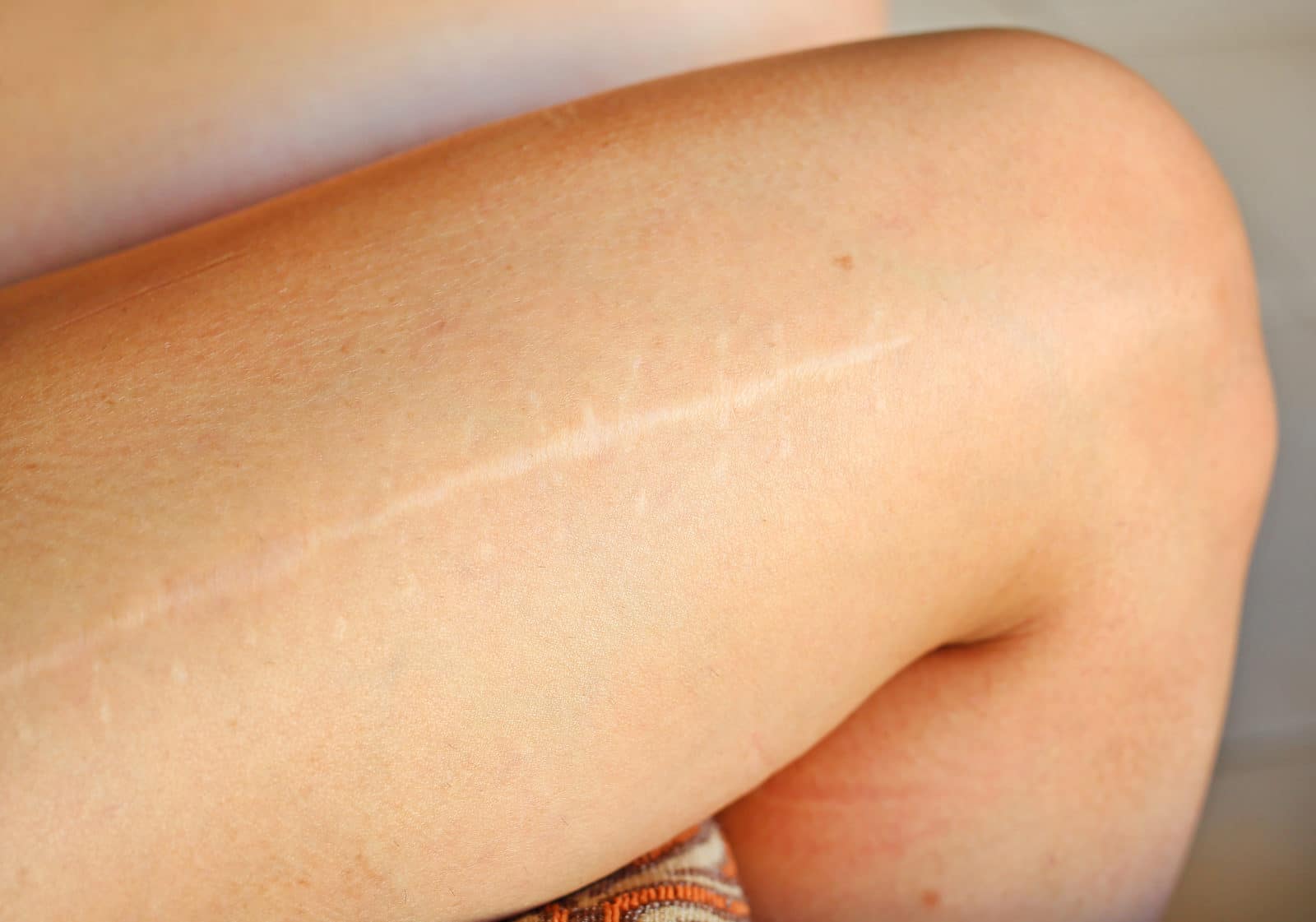
When you get a slit or get wounded, Your body quickly starts pulling the edges of the wound together by growing epithelial tissues around it. In the second layer of skin, The dermis, Contains fibroblasts ready to help in healing.

Fibroblasts are cells containing collagen. Collagen is a protein that is laid down on the wound to help strengthen the skin. The fibroblasts lay down an organised lattice of collagen on the wound. After a few weeks or so, You are healed !

Image result for scars


Wait a minute, Isn't it supposed to form scars ?


Scars are formed when the body very quickly responds to the slit or wound, It works so fast, That it doesn't know what its doing. The fibroblasts rush to the crime scene and deposit collagen in a very unorganized way which forms scars.   

One other thing you learnt from this post is that healing from a wound can be a pretty big and painful process, So the next time you clime a tree, I hope that you'd actually place your hands around it. : )

SAY IT LOUD,
SAY IT PROUD,

I AM A BIO GEEK !!

Saturday, 9 June 2018

How flies eat their food

Insects usually have taste organs on their faces, Like mouth. But some insects like flies, Have taste organs on their feet. That's right, And when they walk on your favorite burger, The nerves in the fly's feet identify types of chemicals in the food and sends it to the brain.


Image result for fly on food
Human's digestion starts taking place in the mouth, Where our saliva has amylase that helps in breaking down food particles easier for digestion. Well, A fly vomits on your burger and the vomit contains certain chemicals including amylase for digestion of the burger.

The vomit makes the tiny part of the burger liquid and the fly sucks the liquid through its feeding tube.

Now you know why your mother tells you to keep your food covered !!


SAY IT LOUD,
SAY IT PROUD,

I AM A BIO GEEK !!